
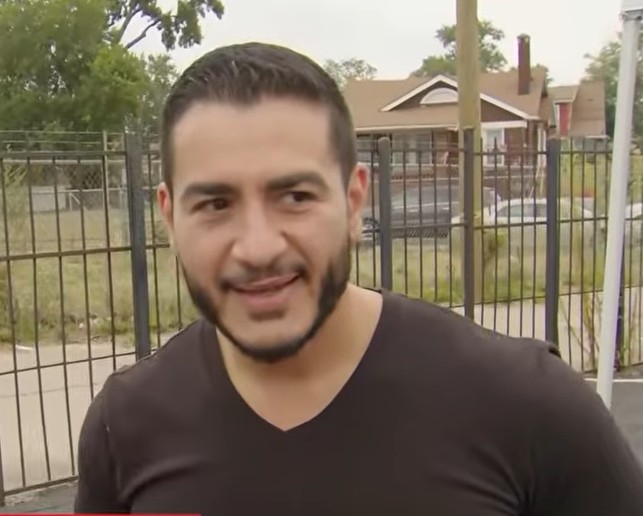
On December 6, Pastor Horace Sheffield III went on his FaithTalk 101.5 FM show and pledged to put his "full force of soldiers" behind Michigan Senate candidate Abdul El-Sayed. He prayed for him on air — "Lord, help this man win" — and dismissed El-Sayed's primary opponent, U.S. Representative Haley Stevens, as someone who "has never been seen" in Detroit.
El-Sayed's campaign had already been writing checks to Sheffield's nonprofit for months.
El-Sayed's campaign made ten separate payments of $7,500 each to the Ecumenical Ministers Alliance — a nonprofit incorporated by Sheffield in 2010 and registered to his home address. That's $75,000 total, spread between October 21 and June 1. Sheffield's on-air endorsement landed right in the middle of the payment window.
El-Sayed responded to the reporting by saying, "You can't buy authenticity." Which is technically true — but apparently you can rent it for $75,000 in ten convenient installments.
The Ecumenical Ministers Alliance isn't a large community organization with a staff and a building. It's a nonprofit registered to Sheffield's house. Sheffield also happens to be the president of the Michigan chapter of Al Sharpton's National Action Network and the father of Detroit Mayor Mary Sheffield. So the money flowed from a progressive campaign to a one-man nonprofit run by a politically connected pastor whose daughter runs the city. The endorsement just happened to follow.
This isn't Sheffield's first time in this lane. Back in 2018, three Michigan candidates — Kevin Robbins, Tracy Green, and Terra Defoe — each paid the same nonprofit $750 in what were labeled "endorsement fees" on campaign filings. When that arrangement surfaced publicly, Sheffield told reporters he "won't be involved in any more campaigns." That lasted about as long as you'd expect.
Salem Media, which owns FaithTalk 101.5 FM, distanced itself immediately. A spokeswoman said, "We completely reject the endorsement." The station's owner, John Adell, was apparently not consulted before Sheffield used the airwaves to deliver what now looks less like pastoral conviction and more like a paid advertisement without the disclosure.
The pattern here extends well beyond one pastor in Detroit. Kamala Harris's 2024 presidential campaign paid $500,000 to Sharpton's National Action Network — the same organization Sheffield runs at the state level. Progressive campaigns have a reliable playbook: route money through nonprofits and activist networks, then present the resulting endorsements as organic community support. The congregation hears their pastor endorse a candidate and assumes it's genuine. They don't see the ten $7,500 payments that preceded it.
Stevens, for her part, leads El-Sayed by 46 points among Black voters in Michigan polling. Which raises an obvious question: if El-Sayed's support in the Black community were real, why would his campaign need to pay a pastor's nonprofit $75,000 to manufacture it?