
A restaurant owner in Ceuta, Spain, locked his doors this week and called a reporter. "Businesses closed. Shops shut because if you open a business, it gets overrun," he told RTVE. "We're scared. The streets are packed. There are no measures in place. It's every man for himself. They're not giving us any help."
Ceuta has 85,000 residents. Sixty thousand migrants just walked in.
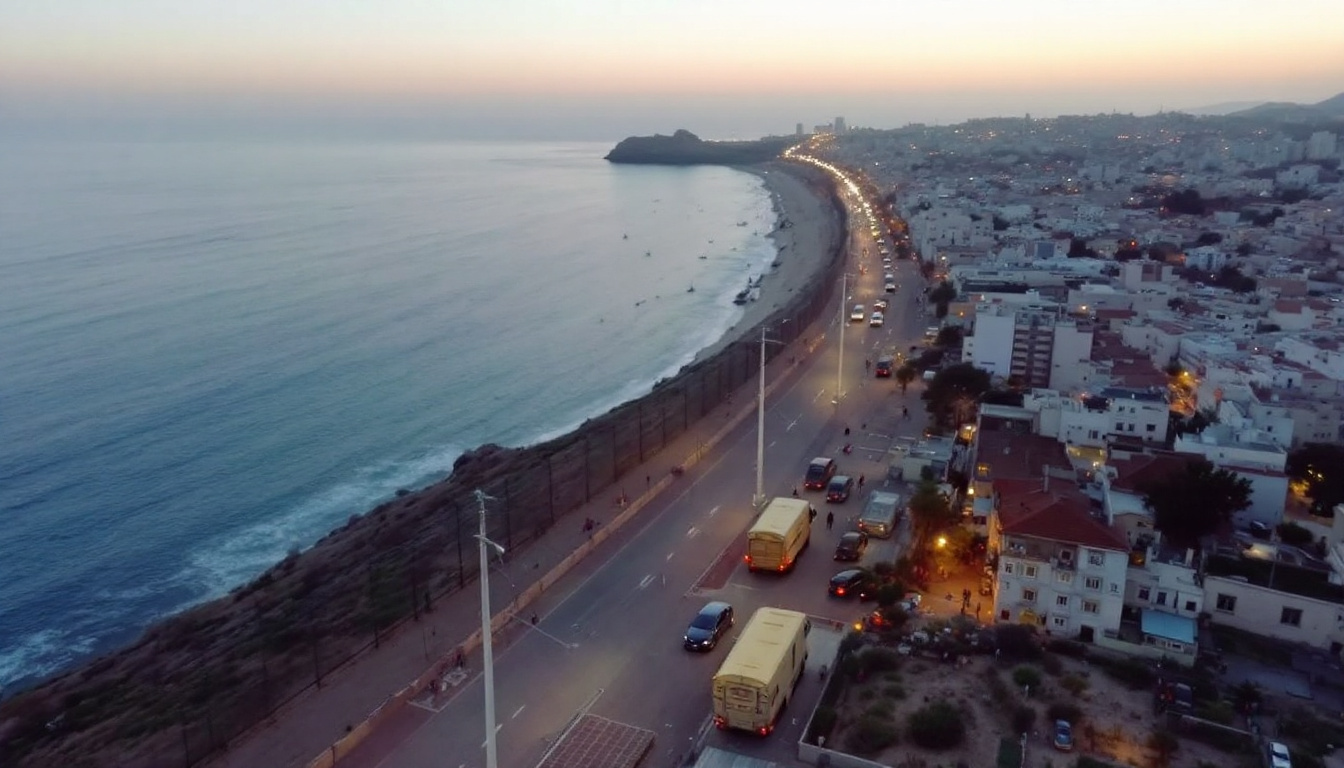
The Spanish enclave — a tiny territory near the African coast bordering Morocco — watched an estimated 49,000 people cross by sea and land in a single 24-hour period beginning July 29, according to Spain's Interior Ministry. That number swelled to 60,000 over the following days, per Juan Jesús Vivas, the head of Ceuta's regional government. At least 18 migrants died in the crossing. Some reports put the death toll as high as 57.
Vivas called the situation "absolutely unsustainable." That might be the understatement of the decade. The 60,000 new arrivals represent more than 70% of Ceuta's entire population. Migrants arrived wearing nothing but swimwear, without a penny or possession to their name, and overwhelmed every public space in the enclave. Residents described streets turned into open-air toilets and migrants bathing in public fountains. Locals started using the word "apocalypse."
The trigger was a Spanish Supreme Court ruling earlier in July that declared migrants intercepted at sea while attempting to reach Ceuta or Melilla cannot be returned to Morocco under the enclaves' special border-rejection regime. A Guardia Civil spokesperson described the effect plainly: "It has been a slow trickle since the Supreme Court's ruling, but today has been an explosion."
Morocco — whose authorities are widely accused of facilitating the surge — reportedly released 2,000 criminals from its prisons in the days before the rush. And the Spanish government's response to all of this was Prime Minister Pedro Sánchez announcing: "We'll deploy buoys at the pier as a temporary measure… while we see what legal changes we need to make, if any."
Residents of Ceuta greeted Sánchez by shouting "traitor" and "coward" at him. It's hard to argue with the assessment. This is a prime minister who previously pushed through an amnesty regularizing roughly one million illegal migrants in Spain and granted 500,000 more legal status and work permits. The Supreme Court ruling didn't happen in a vacuum — it happened in the legal and political environment Sánchez built.
The crisis is now radiating across Europe. Italian Prime Minister Giorgia Meloni floated suspending the Schengen Agreement — the EU's open-borders framework — to prevent secondary movement of migrants from Spain into the rest of Europe. Danish Prime Minister Mette Frederiksen backed Meloni's call. Finnish government ministers Mari Rantanen and Riikka Purra signaled support as well. EU Commission President Ursula von der Leyen issued a statement that read like it was drafted by a committee of people who've never been within five hundred miles of Ceuta: "The images coming from Ceuta are unacceptable. We cannot allow anyone to come to our Union without abiding by our rules."
The images are unacceptable. Noted. The 60,000 people are still there.
Commentator Konstantin Kisin cut through the bureaucratic fog: "These people are invading our countries against our will." That sentence would get you banned from polite European discourse six months ago. Now it's just a description of what happened on camera, broadcast to every phone on the continent.
The comparison to the 2021 Ceuta crisis — when roughly 10,000 people entered over two days — puts the scale in perspective. This was six times that number. The New York Post reported the surge was three to four times larger than the 2021 Haitian migrant crisis at Del Rio, Texas, which dominated American news cycles for weeks.
Spain stripped its own border enforcement tools through its courts. Morocco weaponized the opening. And the prime minister showed up with buoys and an "if any" on whether legal changes are needed.
When 60,000 people walk into your territory in a day and the head of the territory calls it unsustainable and you respond with a floating piece of plastic, you haven't misread the situation. You've chosen it.