
An Illinois nurse is facing intense backlash—and apparent professional consequences—after a series of disturbing TikTok videos surfaced in which he suggested punishing political opponents inside the health care system and implied that ICE agents might deserve to die on the job.
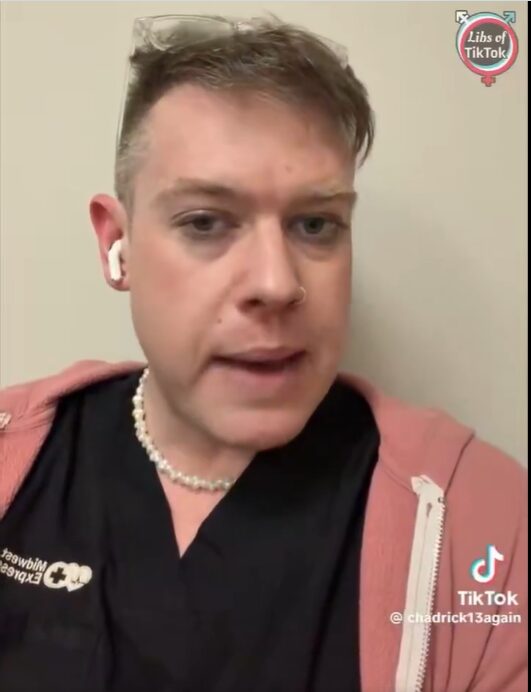
The nurse, Chad Malinowski, who uses the handle @chadrick13again on TikTok, went viral after posting multiple videos that were later obtained and shared by Libs of TikTok. In the clips, Malinowski repeatedly emphasized “how much power” nurses have and appeared to encourage colleagues to use that power to target people they disagree with politically.
In one video, Malinowski referenced the recent death of ICU nurse Alex Pretti during a Border Patrol-involved shooting and suggested that nurses could “avenge” her. He then launched into a discussion of treating severe bleeding—specifically injuries involving the femoral artery—and explained in detail how quickly a patient could die if such bleeding were not stopped.
Malinowski nodded repeatedly as he described the scenario, emphasizing that death could occur “very quickly” without intervention. At the time of the recording, he acknowledged that he was actively working a shift and was dressed in medical scrubs, a detail that immediately alarmed viewers who interpreted the comments as a thinly veiled endorsement of medical malpractice.
Meet Chad Malinowski, a Chicago area nurse. Chad appears to suggest letting ICE agents bleed out and call on nurses to target them. He also says hospitals should fire all MAGA employees because they’re racists.
Chad works at Midwest Express Clinic and Carle Hospital according to… pic.twitter.com/jdi8yGeUtn
— Libs of TikTok (@libsoftiktok) February 2, 2026
The reaction was swift and explosive. The original Libs of TikTok post surpassed 3.5 million views, with many users calling for Malinowski to be investigated by licensing boards and terminated from any patient-facing role. Critics argued that regardless of political views, no medical professional should ever suggest withholding care—or even joking about it.
In a separate video posted later, Malinowski escalated further, openly calling on health care companies to fire right-wing employees. He claimed that people who openly support MAGA are “not safe” to work around others and said they do not deserve to be in health care at all.
“If you’re openly MAGA at this point, and you’re supporting the murdering of people, you don’t deserve to be in health care,” Malinowski said. “You deserve to have your license removed.”
Hours later, after the videos spread widely, Malinowski claimed he was the victim of a “coordinated attack” by bots and MAGA activists. He announced that he would be “going into hiding,” though it remains unclear whether he received any legitimate threats or contacted law enforcement.
By the following morning, Malinowski had locked both his TikTok and Instagram accounts. However, another video was obtained in which an emotional Malinowski attempted to walk back his comments, insisting that he would treat a “MAGA patient” the same as anyone else and accusing critics of twisting his words.
“Seeing people go after your character is really hard,” he said, adding that he is a good person who works hard to care for his patients.
Malinowski’s professional status quickly came into question. While his LinkedIn profile lists him as a family nurse practitioner affiliated with Carle Foundation Hospital in Urbana, Illinois, Carle Health publicly denied any current relationship, stating that Malinowski has not worked for the organization in more than three years.
BREAKING UPDATE: Chad claims he’s been fired and is almost in tears, trying to backtrack his statements
We reached out to the clinic to confirm and will update when they respond. https://t.co/qwwVJl0c8g pic.twitter.com/sV64Z9bk6u
— Libs of TikTok (@libsoftiktok) February 3, 2026
What remains is a deeply unsettling episode that has reignited public concern over political extremism in medicine—and raised a simple but chilling question: should patients ever have to wonder whether their political beliefs could determine whether they receive care?