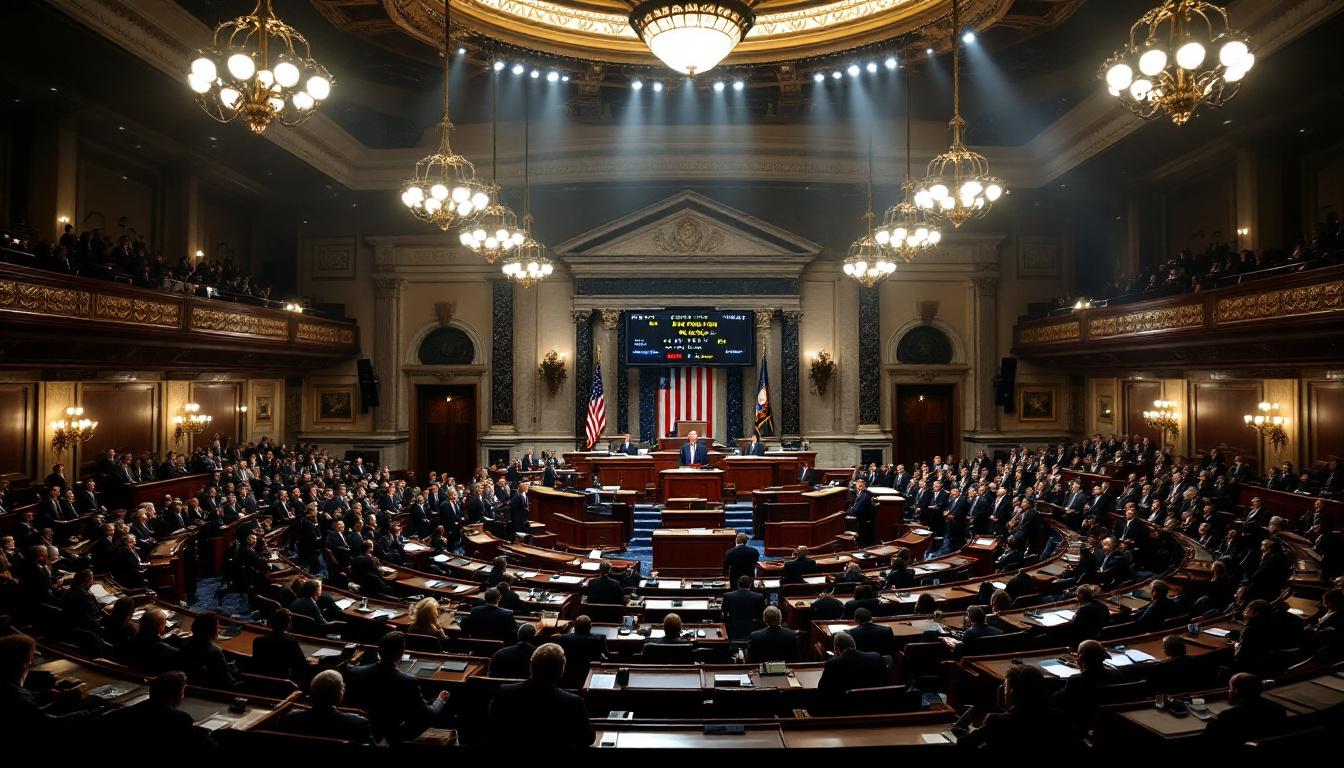

Back in early March, the House voted on a War Powers Resolution that would have required congressional approval before any further military action in Iran. It failed 212-219. Four Democrats — Jared Golden of Maine, Henry Cuellar of Texas, Greg Landsman of Ohio, and Juan Vargas of California — crossed party lines and voted with Republicans. The Senate version died 47-53, with only Rand Paul crossing over from the GOP side and Fetterman breaking ranks from the Democrats. Case closed. The people’s representatives spoke. Move on.
Just kidding. This is the modern Democratic Party, where independent thought is treated like a federal crime and the punishment is having every fundraising spigot in Washington turned off until you learn to clap when told. They’re coming back for Round Two in mid-April, and they’ve spent the entire recess running an “intense whip operation” — their words, not mine — to make sure those four Democrats know exactly what happens to people who think for themselves.
Let’s talk about what these four Democrats actually did. They looked at the situation — American forces engaged in combat operations, hostages being rescued, the Strait of Hormuz under Iranian blockade, missiles flying at our Gulf allies — and concluded that maybe, just maybe, now wasn’t the time to tie the Commander-in-Chief’s hands. That’s it. They made a judgment call. In a functioning democracy, we’d call that “doing your job.” In Nancy Pelosi’s Democratic Party, we call it “a problem that needs to be fixed.”
Jared Golden represents a district in Maine that Trump won. His voters sent him to Washington to exercise independent judgment, not to be a rubber stamp for whatever Chuck Schumer and Hakeem Jeffries cooked up that morning. Henry Cuellar represents a Texas border district where people understand that national security isn’t a game. Greg Landsman is in a swing district in Ohio where people work for a living and don’t have time for political stunts. Juan Vargas represents a California district with a massive military community.
Every single one of them had a legitimate, defensible reason to vote the way they did. And the Democratic leadership’s response wasn’t to listen, or to engage with their concerns, or to wonder whether maybe the resolution was flawed. It was to deploy the whip operation and bring them to heel.
Sources say “most have” been brought around. Translation: they’ve been threatened, cajoled, and promised just enough to flip their votes when the resolution comes back after recess. This is how the sausage gets made in the Democratic caucus — not through persuasion, but through pressure. Vote wrong and your committee assignments get reviewed. Your primary opponent gets a sudden influx of out-of-state cash. Your leadership PAC contributions dry up overnight. It’s the political equivalent of a protection racket, except the mafia at least had the decency to be upfront about it.
And here’s the kicker: the resolution wouldn’t actually stop the war. Everyone knows this. The Senate already killed their version. Even if the House passes it this time, it’s dead on arrival. The whole exercise is political theater designed to give Democrats a talking point for the midterms — “We tried to stop the war and Republicans wouldn’t let us” — while knowing full well that their vote changes absolutely nothing on the ground.
So why are they expending all this political capital to whip four members into line on a vote that doesn’t matter? Because the Democratic Party in 2026 cannot tolerate dissent. Period. The message isn’t about Iran. The message is: you vote with the team, or you become the enemy. It’s the same machine that primaried moderates, that blacklisted consultants who worked with challengers, that turned the party into a top-down operation where the base exists to be managed, not listened to.
Meanwhile, on the Republican side, Thomas Massie and Warren Davidson voted FOR the War Powers Resolution — against their own party — and nobody’s running a “whip operation” to crush them. Rand Paul voted for the Senate version and he’s still doing his thing, being Rand Paul, unbothered. That’s because Republicans, for all their faults, still have room for disagreement. We argue in public. We fight at CPAC. We have the Freedom Caucus battling leadership every other Tuesday. It’s messy and loud and sometimes embarrassing. But it’s real.
The Democratic version of “big tent” in 2026 is: you can believe whatever you want, as long as you vote exactly how we tell you. Diverse backgrounds are celebrated. Diverse opinions are not.
Those four Democrats who voted their conscience in March did something brave. It might not seem like much — one vote on one resolution — but in a party that demands lockstep obedience, it was an act of genuine political courage. And now they’re being punished for it. Not publicly, not with any transparency, but behind closed doors where the arm-twisting doesn’t leave bruises that voters can see.
Watch the vote when it comes back in mid-April. If those four Democrats flip, you’ll know exactly what happened. And you’ll know that the Democratic Party’s commitment to “democracy” ends precisely at the door of their own caucus meeting.
The party that screams loudest about authoritarianism can’t even let four of its own members vote their conscience without sending in the enforcers. Let that sink in.