
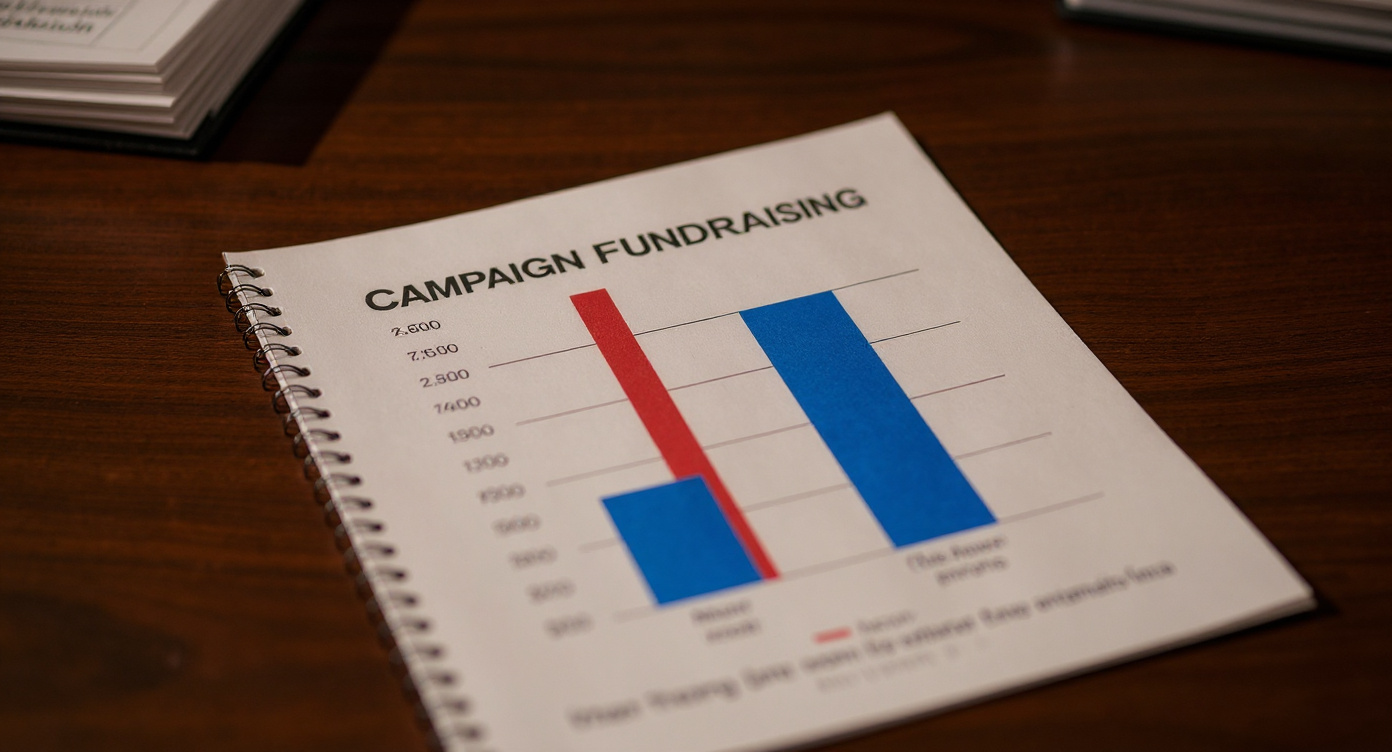
$682 million. That's how much Republicans have reserved in ad spending from now through Election Day, according to AdImpact. Democrats? $491 million. That's not a gap. That's a canyon.
The party of Big Tech billionaires and Hollywood fundraisers is getting out-raised by the America First movement. Quietly.
The growing financial panic inside Democrat circles, where strategists are watching the midterm money map and not liking what they see. The AdImpact numbers show a $191 million Republican advantage in ad reservations alone — the kind of structural edge that doesn't close in six weeks.
Dick Morris, the former Clinton adviser turned political strategist, laid out the Senate landscape in terms that should make Democrat operatives reach for the Tums. "I think we'll win Iowa, Ohio, Texas, Maine, and Alaska," Morris said, adding that Republicans have "an excellent chance of a takeaway" in four Democrat-held states.
Those aren't fringe races. Michigan has Republican nominee Mike Rogers running against Democrat Abdul El-Sayed. Minnesota features Michele Tafoya, the former NFL sideline reporter, challenging Democrat Lt. Gov. Peggy Flanagan. In New Hampshire, former Republican Senator John Sununu is looking to reclaim the seat being vacated by Senator Jeanne Shaheen, squaring off against Democrat Rep. Chris Pappas.
Three open or competitive Senate seats in states Democrats assumed were safe. Three races where Republican candidates are running with a financial tailwind and Democrat incumbents or successors are scrambling.
The fundraising gap tells a story the polls don't always capture. Ad reservations aren't polls. They're bets — real dollars committed by real committees that have internal numbers telling them where the races actually stand. When one side is outspending the other by nearly $200 million in reserved airtime, that side isn't guessing. It's investing.
Democrats on TV are still projecting confidence. CNN panels still feature strategists insisting the fundamentals favor them. The money says otherwise. The $491 million isn't embarrassing on its own — it's a massive number. But $191 million less than your opponent with six weeks to go means you're playing defense on terrain you expected to own.
The donor class that was supposed to be the Democrat firewall — Silicon Valley, Wall Street, entertainment industry — apparently didn't get the memo. Or got it and passed. Either explanation is a problem for a party that spent the last decade telling itself small-dollar grassroots energy would carry the day.
Small-dollar grassroots energy doesn't reserve $682 million in ad time. Broad-based financial support from voters who actually believe in the candidates does.
Dick Morris worked inside the Clinton machine. He knows what panic looks like from the inside — the internal polls that contradict the public messaging, the donor calls that go unreturned, the strategists quietly updating their resumes. When he says Republicans have an excellent chance at takeaways in four Democrat-held seats, he's reading the same numbers the Democrats are reading.
They just don't want their base to see the receipt.