
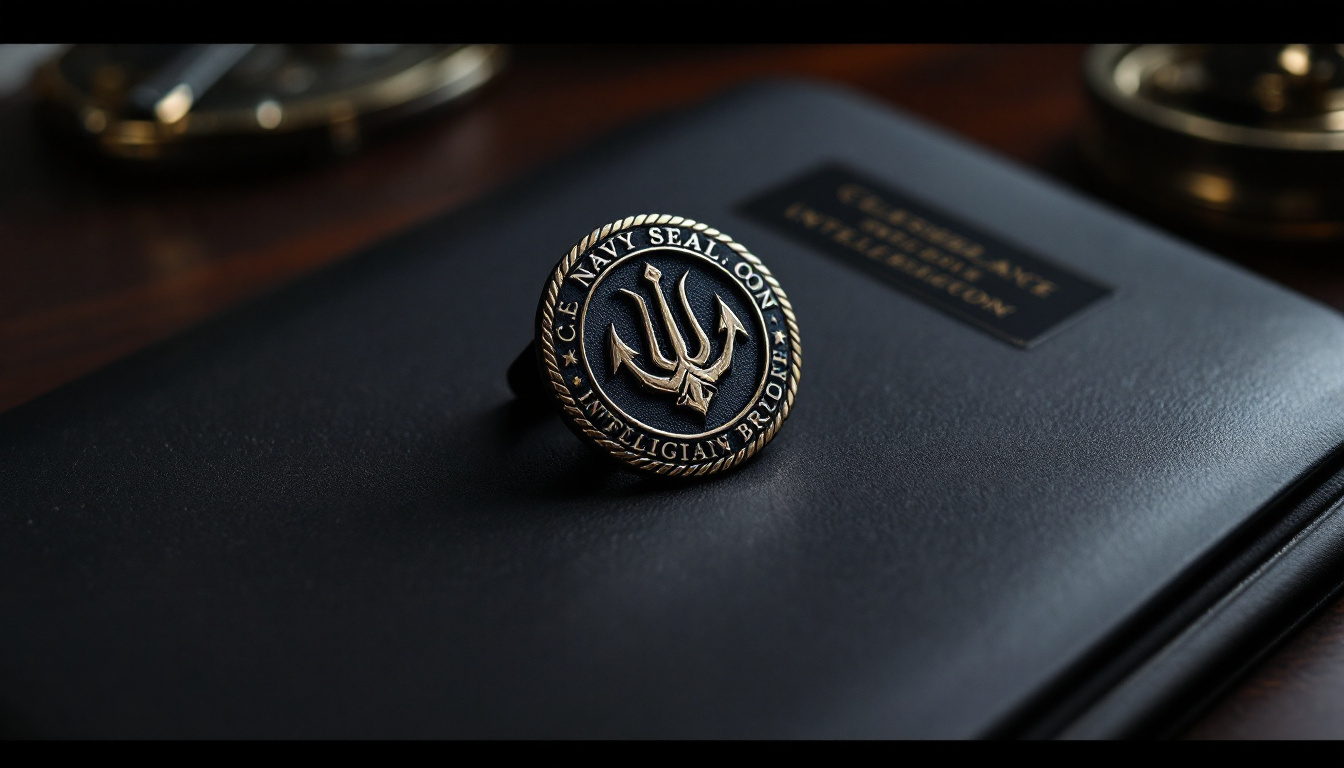
John Cremins spent years kicking down doors as a Navy SEAL officer. Now he's been named Deputy Under Secretary of the Navy for Intelligence and Security — the single person who oversees all intelligence activities, special operations, irregular warfare, sensitive activities, and security across the entire Department of the Navy.
The guy who actually did the job is now running the office that supports it.
Acting Secretary of the Navy Hung Cao — himself a combat veteran — announced the appointment, saying Cremins' "extensive background and unparalleled expertise" would "position the Department of the Navy to excel in a new era of war fighting." That's Pentagon-speak for "we finally put someone in this chair who's heard a gunshot that wasn't on CNN."
The Navy currently has over 20 warships deployed to the Middle East. We're running a blockade of Iranian ports under U.S. Central Command. The USS America, an amphibious assault ship designated LHA 6, shifted its homeport back on September 25, 2025, as part of the broader force posture realignment. This isn't peacetime staffing. This is a wartime intelligence portfolio handed to a man who's operated in exactly the environments he'll now be providing intelligence about.
Cremins comes to the role after spending time in the private sector working defense technology and national security — which means he's seen how the bureaucracy looks from the outside, too. Not just another admiral who retired on Friday and started consulting on Monday. He built things. He shipped products that warfighters actually used.
"It is a profound honor to return to the Department of the Navy," Cremins said, adding that his mission is "to ensure our forces maintain the decisive advantage necessary to secure American maritime dominance." Maritime dominance. Not "maritime equity." Not "a rules-based maritime order." Dominance. When's the last time you heard that word come out of a Pentagon appointment without an apology chaser?
The broader intelligence community is still sorting itself out. Tulsi Gabbard resigned as Director of National Intelligence back in May 2026. Jay Clayton, who Trump tapped to replace Gabbard, was just sworn in last week. The civilian intelligence leadership pipeline has gaps. What it doesn't have is a shortage of people willing to testify about "interagency cooperation" without ever having cooperated with anything more dangerous than a parking garage elevator.
Cremins is a different animal. SOF guys who move into senior defense roles tend to ask one question that career bureaucrats never do: does this actually work? Not "does this satisfy the reporting requirement" or "does this align with the strategic framework." Does it work. Will it keep someone alive. Will it kill the right person.
The usual objection from the credentialed class is that special operations officers lack the "institutional breadth" for senior policy roles. Which is an interesting complaint to level at someone whose career required him to integrate intelligence, logistics, communications, and direct action simultaneously — in buildings where people were actively trying to kill him. Apparently that's narrower experience than running a GS-15 desk at the Pentagon for twenty-two years.
The appointment slots Cremins into a role that touches everything from intelligence collection to irregular warfare doctrine at a moment when the Navy is operationally stretched across the Middle East and the Pacific. The department isn't looking for someone to write a white paper about great power competition. It's looking for someone who understands what happens when competition stops being theoretical.
Twenty warships in the Persian Gulf. A SEAL running naval intelligence. A combat veteran as Acting Secretary.
Somewhere in the E-ring, a PowerPoint slide about "diversity of thought in senior leadership" just became true by accident.