
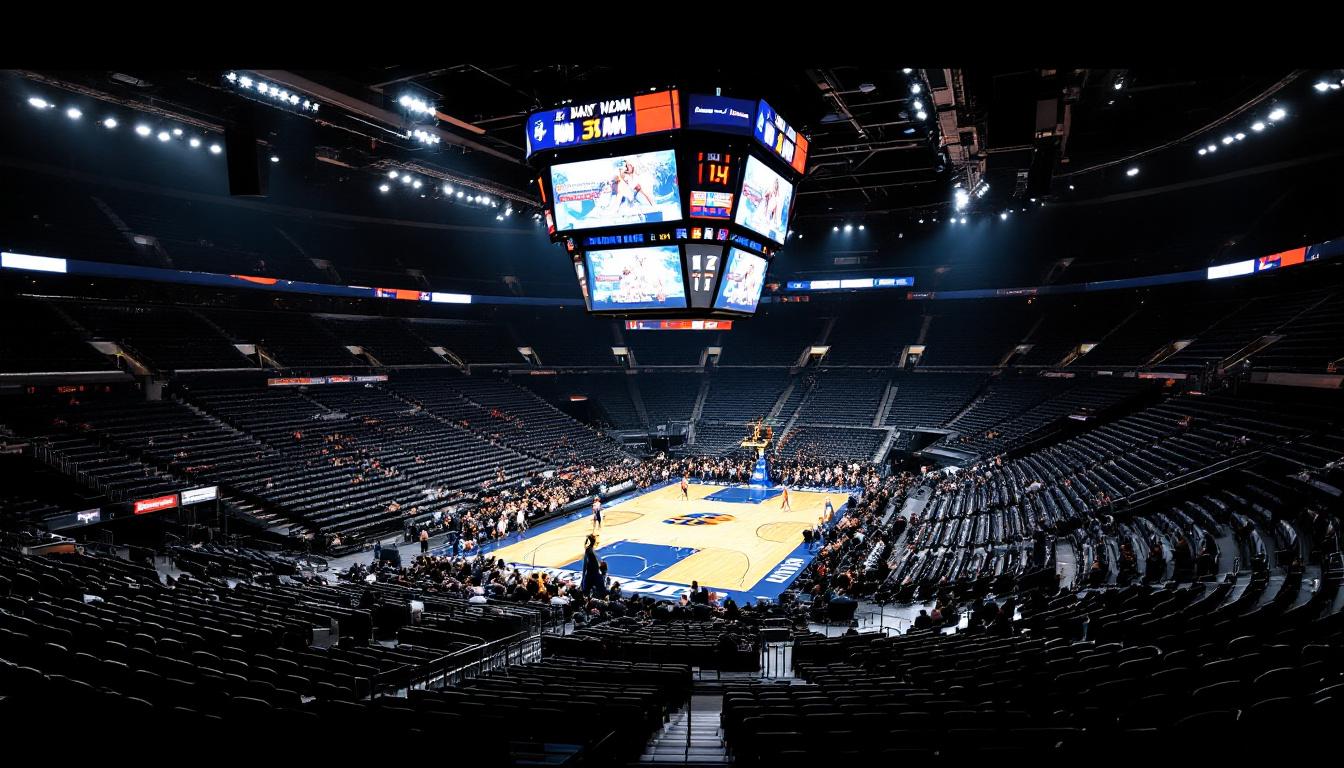
The Indiana Fever’s season opener against the Dallas Wings is days away, and the franchise that Caitlin Clark single-handedly turned into a $370 million property can’t sell out the building. Thirty to forty percent of tickets remain unsold. The upper deck is more than 40% empty.
Welcome to the WNBA — where the league’s only bankable star gets body-checked on national television and the commissioner sends a sternly worded memo about “competitive physicality.” Weird how that business model isn’t working out.
The numbers here are so absurd they read like satire. The cheapest seat at Gainbridge Fieldhouse for the May 9 opener costs $97.11. The exact same seat for the game against the Portland Fire on May 20? Twenty-one dollars. Want to sit 11 rows from the court in Section 16? That’ll be $876.95 for the opener. The same chair two weeks later goes for $228. That’s not a markup — that’s highway robbery with a WNBA logo on it.
And the Fever are the POPULAR team. This is the franchise with the biggest star in women’s basketball history. If THEY can’t fill the building at those prices, what do you think is happening everywhere else?
We already know the answer. Last year, when Clark went down with an injury, ticket prices for the Fever-Sky game at the United Center — a 23,500-seat NBA arena they booked specifically because of Clark — plummeted 71%. Get-in prices dropped from $86 to $25 overnight. The average purchase price across the four games she missed cratered from $137 to $80.
Seventy-one percent. Because one player wasn’t on the court.
As BlazeTV’s Jason Whitlock put it: “It’s a sign that the WNBA is about to potentially crash and burn.” He added that the league has “probably already burned up the goodwill that Caitlin Clark earned them” and that “if they’ve diminished the star of Caitlin Clark, what they’ve really diminished is the entire league.”
He’s right. And everyone with functioning eyes knew this two years ago.
Remember what happened when Clark entered the league? Attendance exploded. TV ratings tripled. Road arenas that used to echo like a high school gym were suddenly selling out NBA venues. The Fever went from a franchise nobody cared about to one valued at $370 million. All because of one 22-year-old from Iowa who could actually play basketball AND (here’s the radical part) fans actually enjoyed watching.
So naturally, the WNBA decided to punish her.
The league let opponents mug her on every possession. Chennedy Carter hip-checked her into next Tuesday and became a folk hero for it on social media. The WNBA’s own broadcast partners ran segments debating whether Clark “deserved” the rough treatment because she hadn’t “earned her stripes.” Veterans openly mocked her. The players’ union went to war over a new CBA rather than capitalizing on the golden goose standing right there in a Fever jersey.
They had lightning in a bottle and they smashed the bottle because it was the wrong color.
This is the Get Woke, Go Broke playbook playing out in real time. The WNBA spent years demanding respect it hadn’t earned, lecturing fans about social justice, and putting ideology above entertainment. Then one player showed up who was actually entertaining — a wholesome, talented, exciting player that normal sports fans wanted to watch — and the league treated her like an invader.
Now they’re charging $97 for nosebleeds and wondering why the seats are empty.
The league just signed a $200 million annual media deal. All 44 Fever games get national television coverage this season. They’re expanding to 18 teams by 2030. On paper, the WNBA has never been bigger. But strip away Caitlin Clark and what do you have? A league where ticket prices crash 71% when one player sits out. A league that can’t sell out its biggest team’s home opener. A league where fans are posting “this fall can’t happen quick enough” — meaning they’d rather watch the NFL than sit through another WNBA game without Clark on the court.
That’s not a league. That’s a one-woman show with a very expensive overhead.
The saddest part? Clark is healthy now. She’s coming back for 2026 with an off-ball role designed to ease her workload. The talent is there. The audience is there — when she plays. But the league has spent two years alienating the very fans she brought in, and those fans have long memories.
You don’t get to body-check your meal ticket, call her fans racist for complaining about it, and then act surprised when the arena is half empty.
The WNBA didn’t have a product problem. They had a Caitlin Clark windfall. And they lit it on fire to keep the DEI bonfire going. Now the checks are coming due and the seats are empty.
Enjoy charging $97 for the privilege of watching it collapse.

![EPA Head Lee Zeldin Smacks Down Democrat with FACTS Over Climate Change [WATCH]](https://www.thebeardedpatriot.com/wp-content/uploads/2026/04/tmp7539j6qu.jpg)