
On January 19th, a Hezbollah sympathizer drove a truck packed with fireworks and gasoline through the front doors of Temple Israel synagogue in West Bloomfield, Michigan, with 140 children inside. He was stopped by armed security guards. Every child went home alive. The attacker had not been on any terrorism watchlist. He was a naturalized American citizen who radicalized after his brothers were killed by an Israeli airstrike.
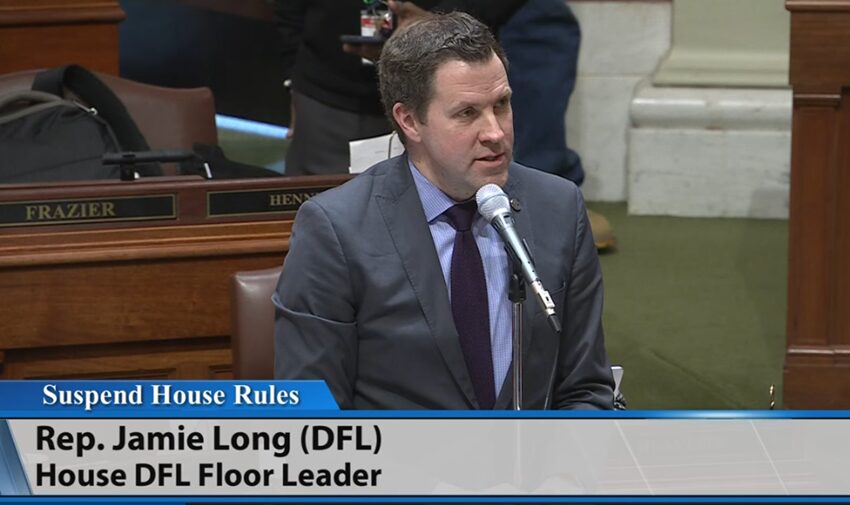
One week later, Minnesota House Democrats blocked a bill that would have required law enforcement to report undocumented immigrants suspected of committing violent crimes to Immigration and Customs Enforcement.
The bill was not complicated. It did not require mass deportations, warrantless searches, or any of the other scenarios Democrats typically invoke when opposing immigration enforcement measures. It required one thing: that when an undocumented individual is suspected of committing a violent crime, authorities notify federal immigration enforcement. The suspect does not need to be convicted. They do not need to be charged. They need to be suspected of violence — the threshold that triggers hundreds of other reporting requirements in American law enforcement every day.
Democrats called it racial profiling. Thirty-five public defenders signed a letter warning it would “separate children from their parents” and “undermine public safety.” The bill did not pass out of committee.
Minnesota is not a state with a theoretical relationship to violent crime committed by illegal immigrants. The Trump administration’s Operation Metro Surge — the largest immigration enforcement operation in state history — removed more than 4,000 criminal illegal aliens from Minnesota streets in its first weeks. The White House published a specific case study of one individual Minnesota Democrats had shielded from deportation for years despite a violent criminal record. The Trump administration deported him anyway.
The state’s Democratic leadership spent years building sanctuary-adjacent policies that explicitly limited local law enforcement cooperation with ICE. Operation Metro Surge exposed the consequences of those policies: thousands of people with violent criminal records who had been present in Minnesota communities for years, protected from federal immigration enforcement by the same political apparatus that is now blocking the ICE reporting bill.
Four terrorist attacks hit American soil in the two weeks following the Iran operation — including the Temple Israel attack. The FBI has intercepted signals suggesting Iranian-linked networks may be activating sleeper cells inside the United States. The Trump administration is actively hunting approximately 18,000 known or suspected terrorists released into the country during the Biden era.
In that environment, a state legislature’s Democratic caucus blocked a bill requiring that violent criminals be flagged to federal authorities.
The opponents’ argument — that reporting suspected violent criminals to ICE raises due process concerns because the suspect hasn’t been charged yet — would be compelling in a different context. Law enforcement agencies share information about suspected violent individuals constantly, across jurisdictions, without criminal charges as a prerequisite. The concern is not due process. The concern is that the information reaches ICE specifically. That is a policy choice to protect undocumented individuals from immigration consequences even when those individuals are suspected of violence against American communities.
Minnesota’s Democratic blocking of the ICE reporting bill is not an isolated vote. It is the latest data point in a consistent policy posture: limit federal immigration enforcement, restrict information sharing with ICE, and frame every measure that would make it easier to remove violent illegal aliens as a civil rights violation.
That posture has a political cost that is becoming harder to manage. The Temple Israel attack came from a naturalized citizen — beyond the scope of ICE entirely. But the broader pattern of who is committing violence against American communities, and what policy choices make that violence more likely to continue, is a conversation Minnesota Democrats are going to have to participate in whether they want to or not.
They voted against the bill. The question now is whether they can explain that vote to the 140 families in West Bloomfield who know exactly what it looks like when the wrong person slips through the cracks.