
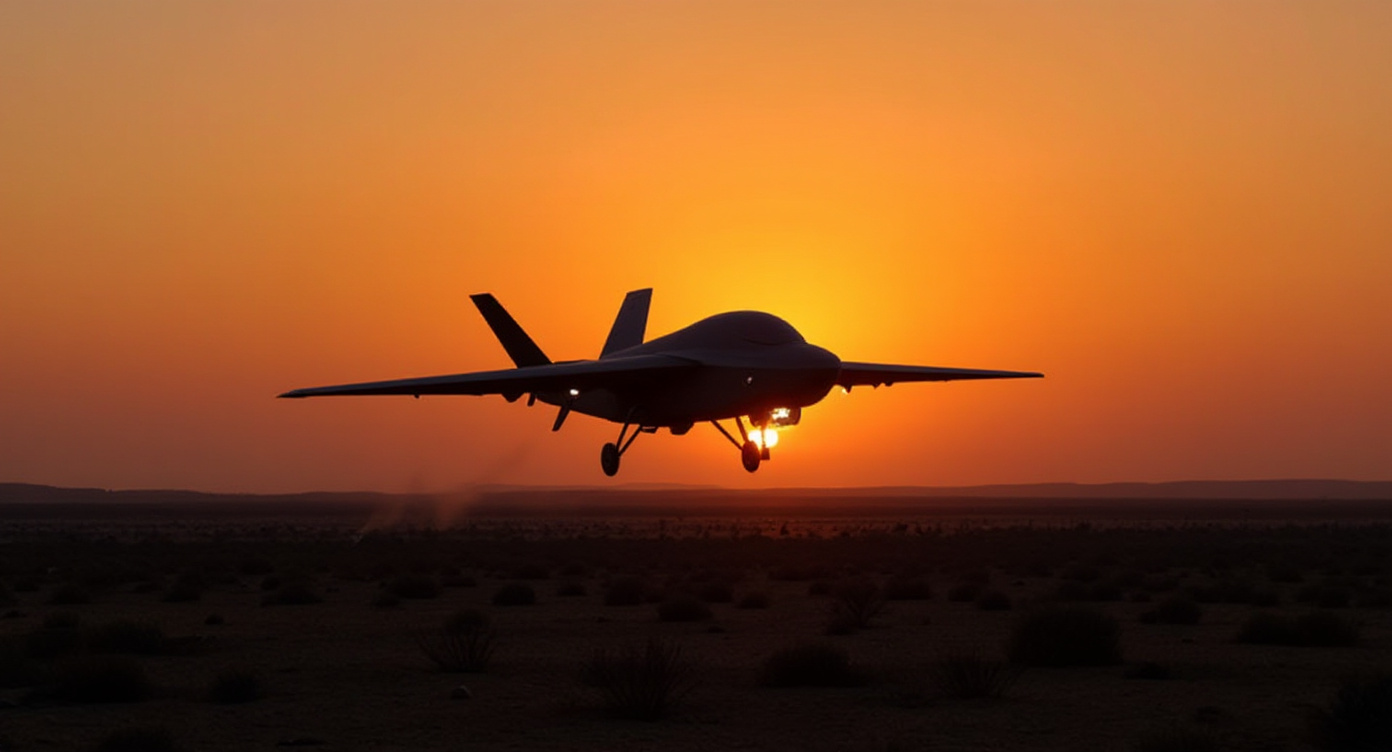
On June 19, a precision airstrike in northwest Syria turned senior ISIS leader Ali Husayn al-'Ulaywi into a memory. U.S. Central Command announced the kill on Tuesday, five days after the strike, in a press release so matter-of-fact it read like a routine maintenance report.
Which, for this administration, it basically is.
CENTCOM confirmed that the strike on al-'Ulaywi was "part of ongoing U.S. efforts to disrupt and eliminate terrorists seeking to attack Americans abroad or the U.S. homeland." No prime-time address. No Rose Garden presser with a dramatic pause before the punchline. Just a dead terrorist and a paragraph.
CENTCOM Commander Adm. Brad Cooper followed up with the kind of understated language that only sounds boring if you're not paying attention. "CENTCOM and our partners remain committed to rooting out remaining remnants of ISIS to ensure its enduring defeat," Cooper said. "We will continue to defend the U.S. homeland, our service members, and allies and partners across the region."
The timing matters more than the tone suggests. ISIS declared what it called a "new phase" of operations in Syria earlier this year, launching a string of attacks since February targeting the government of Syrian President Ahmed al-Sharaa. The group carried out shootings against Syrian army personnel in Mayadin in Deir ez-Zor province and in the northern city of Raqqa. Just days before the airstrike, ISIS claimed responsibility for an attack near Manbij in Syria's northeastern Aleppo province.
ISIS even issued a direct threat against al-Sharaa himself, calling the Syrian leader a "watchdog of the global coalition" and promising his fate would mirror Assad's. Al-Sharaa's government joined the U.S.-led coalition fighting ISIS last year, making him a priority target for the group's reorganization effort.
So this wasn't a random Wednesday drone strike on some mid-level operative hiding in a basement. Al-'Ulaywi was a senior figure inside a group that's actively trying to destabilize Syria's new government, assassinate its leadership, and rebuild its operational capacity across the region. Taking him off the board disrupts command and logistics during a critical period of ISIS escalation.
The usual objection from the foreign policy establishment writes itself — that airstrikes alone don't defeat ideologies, that we've been "defeating" ISIS for a decade. Fair enough. But there's a difference between strategic patience that produces results and strategic patience that produces nothing. The previous administration spent four years explaining why everything was complicated. This one spent five days between killing a senior ISIS leader and mentioning it in a press release, as reported by the New York Post and Fox News.
This strike also didn't happen in isolation. The same week, U.S. Southern Command conducted two separate lethal strikes — one in the Eastern Pacific on June 18 that killed three alleged narco-terrorists, and another in the Caribbean on June 21 that killed two more and rescued six survivors. Joint Task Force Southern Spear handled both operations. That's three theaters, three operations, and results in all of them within a single week.
The media, meanwhile, spent the weekend in a collective meltdown over a former Olympian vandalizing the Lincoln Memorial Reflecting Pool. CNN ran what felt like round-the-clock coverage of wet marble. The vandal got more airtime than a dead ISIS commander.
That's a revealing set of priorities. A senior terrorist leader coordinating attacks across multiple Syrian provinces gets a Tuesday afternoon press release and a news cycle that lasts about four hours. A guy splashing around in a reflecting pool gets forty-eight hours of breathless panel discussions.
One of those stories involves an actual threat to American lives. The other involves a misdemeanor and some dirty water.
The press release didn't need to be dramatic. The airstrike already was.