
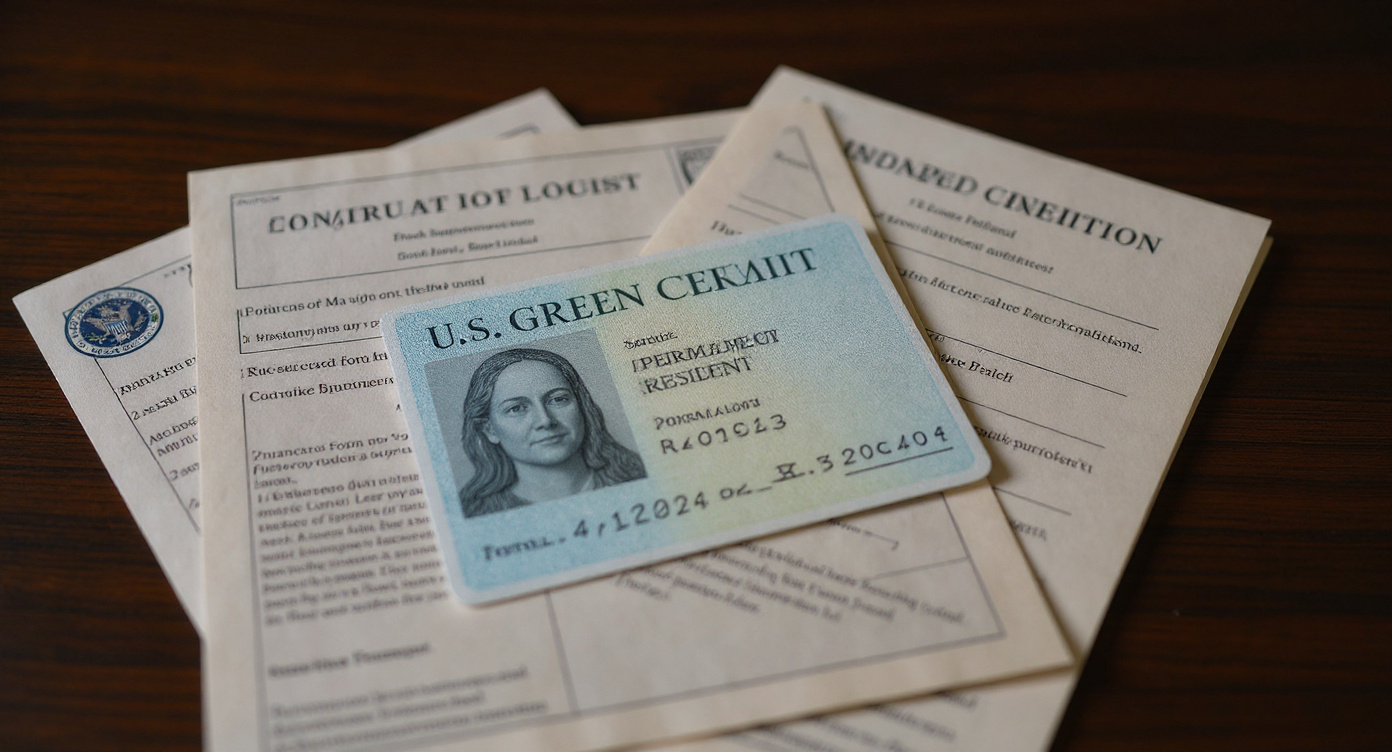
The Department of Homeland Security announced this week that migrants currently receiving welfare benefits — food stamps, Medicaid, housing assistance — will no longer be eligible for green cards under a revived "public charge" rule. An estimated 588,000 green card applicants will face the broader scrutiny, with the policy expected to take effect in October. DHS estimates the change will reduce federal and state transfer payments by approximately $111 billion over a decade.
The concept is not complicated. If American taxpayers are paying your rent and buying your groceries, you probably shouldn't be on the fast track to permanent residency.
USCIS Director Joseph Edlow put it plainly: the move "is reaffirming the requirement of self-reliance, protecting public resources and ending policies that encouraged dependency on the backs of hard-working American taxpayers." State Department spokesperson Tommy Pigott added that "President Trump has made clear that those who wish to immigrate to the United States must be financially self-sufficient." The new rule would also require some overseas green card applicants to post a bond of up to $100,000 to, in Pigott's words, "demonstrate they have access to the funds needed to support themselves." That's not a punishment. That's a deposit — the kind of basic financial screening every landlord in America does before handing over keys.
The public charge concept dates to 1999 Clinton-era guidance defining it as being "primarily dependent on the government for subsistence." Trump's first term expanded it in 2019 to include Medicaid, housing assistance, and SNAP. The Biden administration watered it down in 2022, gutting the rule so that accepting government assistance wouldn't count against an applicant's green card chances. The Trump administration is now rescinding that decision and restoring the teeth.
Advocates are warning of a "chilling effect" — predicting that roughly 950,000 people in immigrant households may disenroll from or forgo public benefits as a result. That's not a critique of the policy. That's the policy working. The goal is self-sufficiency. If 950,000 people in immigrant households reconsider their dependence on taxpayer-funded programs because they want to stay in this country, the administration has achieved exactly what it set out to do.
The Biden administration's 2022 decision to gut the rule told applicants, in effect, that accepting taxpayer-funded assistance wouldn't count against them. The result was predictable. When you remove consequences from a decision, you get more of that decision. The current administration is simply putting the consequences back.
Green card holders can become U.S. citizens in as little as five years. That's not a temporary arrangement — it's a pathway to permanent membership in this country. Asking applicants to demonstrate they can support themselves before they get on that pathway isn't radical. It's the baseline expectation that existed under three consecutive administrations before one of them decided to look the other way.
Self-sufficiency used to be a prerequisite. Then it became optional. Now it's a prerequisite again. The only thing that changed in between was who was in charge of enforcing it.