
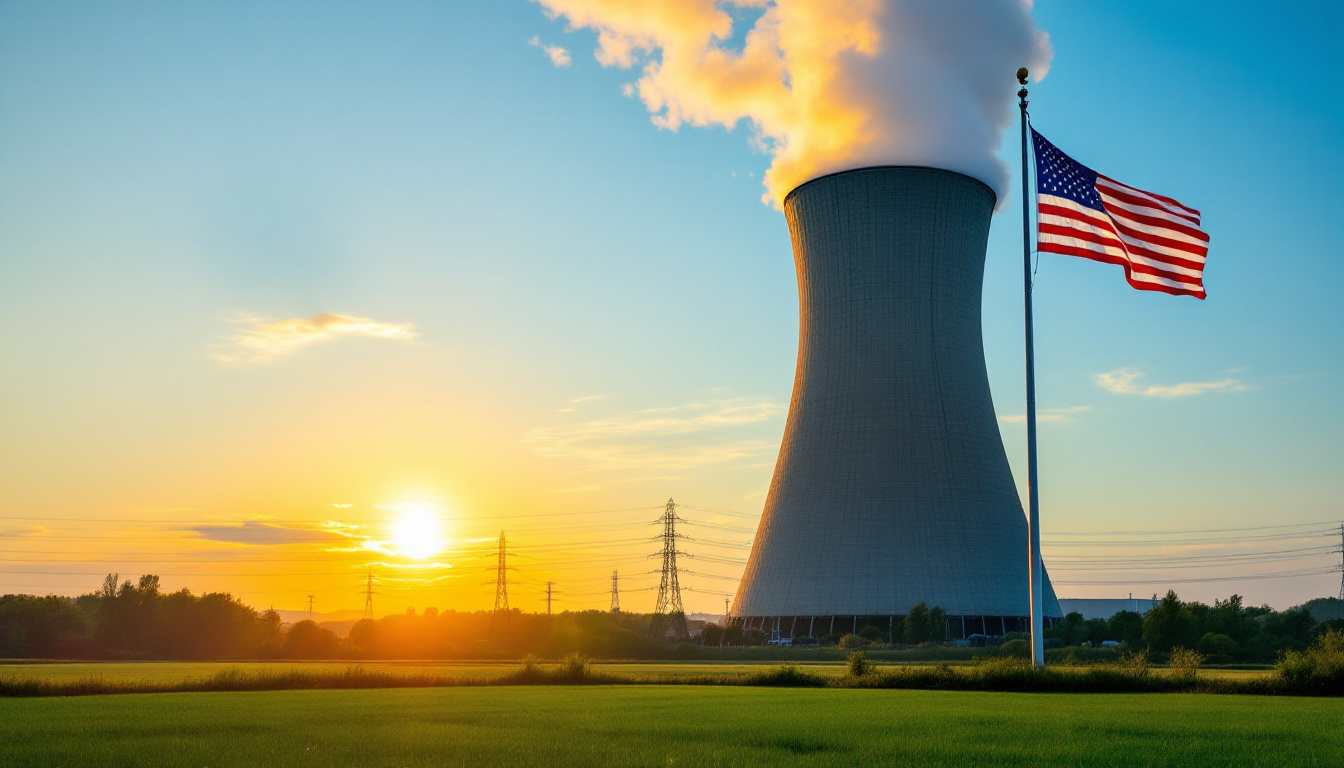
In 1979, a reactor at Three Mile Island partially melted down, and America decided it was done with nuclear power.
Forty-seven years later, the Trump administration is turning Three Mile Island back on.
The Crane Clean Energy Center, the new name for Three Mile Island Unit 1, is getting a $1 billion federal loan to restart. That puts 835 megawatts back on the grid, enough for about 800,000 homes, and brings more than 600 jobs to central Pennsylvania.
The Nuclear Regulatory Commission still calls the 1979 meltdown "the most serious accident in U.S. commercial nuclear history." The NRC's count of people it killed is zero. Nobody was injured either, and years of health studies on the surrounding community found no detectable effects.
The damage was confined to Unit 2. Unit 1, the reactor coming back now, sat right next door. It went back into service in 1985 and ran until 2019, when it closed for economic reasons.
The accident hurt nobody. The panic afterward is what froze American nuclear power for a generation. Twelve days before the accident, Hollywood released The China Syndrome, a thriller starring Jane Fonda about a nuclear plant cover-up. When a real reactor had trouble, the movie became the script. Fonda and her husband Tom Hayden went on a national anti-nuclear tour, and the left has been fighting the most reliable clean power source in America ever since.
The results speak for themselves. America built 112 reactors between 1967 and 1990, then spent three decades building almost nothing. Today 94 reactors produce about 19% of the country's electricity, and the average one is 44 years old. France got over its nerves long ago and now gets about 70% of its electricity from nuclear.
Democrats took Fonda's fears and wrote them into policy. Andrew Cuomo spent years pushing to shut down Indian Point, the plant that supplied roughly a quarter of New York City's electricity. It closed for good in April 2021. New York replaced it with natural gas, and the state's power-sector emissions went up. Bernie Sanders ran for president in 2020 promising to stop renewing licenses for existing plants. The Green New Deal FAQ put out by Alexandria Ocasio-Cortez's office promised to "transition off of nuclear."
The Trump administration is going the other direction, and fast.
On October 27, Energy Secretary Chris Wright stood at Constellation's Byron Generating Station in Illinois and announced a conditional loan commitment of up to $5 billion to get more power out of eight existing Constellation plants in Illinois, Maryland, and Pennsylvania. The upgrades add nearly 1.1 gigawatts, enough for more than 930,000 homes, and support more than 10,000 jobs. The reactors are the same ones already running. They'll just produce more power.
Wright skipped the usual Washington hedging. "The Energy Department is accelerating President Trump's American nuclear renaissance and unlocking the full potential of our nation's nuclear fleet," he said, calling it "yet another example of the commonsense energy addition policies the Trump Administration is embracing."
The comeback stretches across the heartland. Michigan's Palisades plant is the first American reactor ever pulled back out of decommissioning, bringing 800 megawatts and up to 650 jobs with a $1.5 billion loan behind it. In Iowa, the Duane Arnold Energy Center is coming back with $1.9 billion in financing, 615 megawatts, about 1,500 construction jobs, and more than 450 permanent ones.
All of it traces back to Trump's May 2025 executive order, "Reinvigorating the Nuclear Industrial Base," which set a goal of 5 gigawatts of added nuclear capacity. The Energy Department's UPRISE program, short for the Utility Power Reactor Incremental Scaling Effort, has already lined up 4.7 gigawatts of it. The administration has now conditionally committed nearly $30 billion to the nuclear sector, including $4.2 billion for Vistra plants in Pennsylvania and Ohio.
Trump also put the NRC on a clock: 18 months to decide on a new reactor, 12 months for an existing one. Under the old system, approvals could drag on for a decade.
The private sector has already bet on nuclear. Constellation has 20-year agreements with Google and Amazon backing more than $7 billion in plant upgrades, including a $4.3 billion Google deal to add 890 megawatts across 11 reactors. The companies building AI need baseload power, the kind that keeps running at 3 a.m. on a windless January night, and they know where to get it.
The last time Washington got this excited about an energy loan, Obama's Energy Department handed $535 million to Solyndra, a solar panel maker that went bankrupt two years later. This time the money is going to a technology with a track record going back to 1951, and tech giants are lining up to buy what it produces.
American nuclear power started on December 20, 1951, when the EBR-I reactor in Idaho lit four light bulbs. Six years later, Shippingport, on the Ohio River outside Pittsburgh, was sending power to homes. Illinois now runs 11 reactors, more than any other state.
Four light bulbs in Idaho, 1951. Nine hundred thirty thousand homes, 2026. And Three Mile Island back on the grid.