

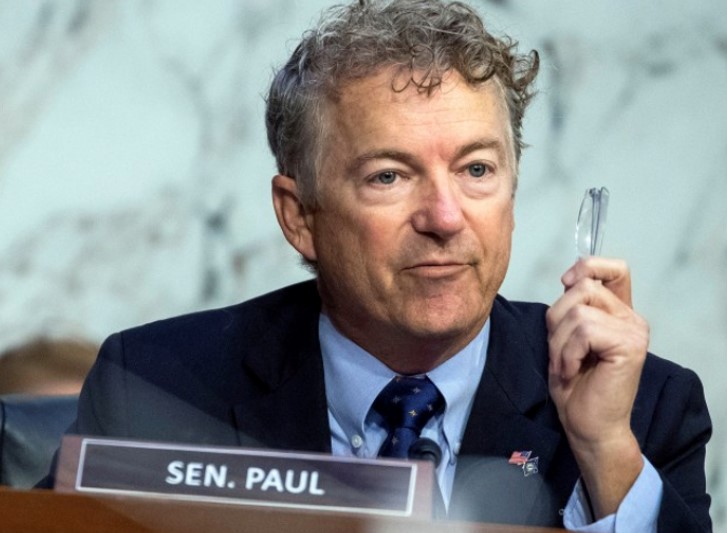
Somewhere in the digital wreckage of Anthony Fauci's government email account, a former top aide sent a message that amounted to a confession. "Hey, Dr. Fauci, I was able to destroy tons of your emails this weekend," the assistant wrote, according to Senate Homeland Security Committee Chairman Rand Paul. The assistant wasn't whispering it. She was bragging.
That's a federal crime.
Paul revealed publicly this week his committee had uncovered "explosive information." He said his committee had been combing through Fauci's internal logs — not the public-facing testimony, not the cable-news performances, but the back-channel communications that were never supposed to see daylight. What they found was an aide openly celebrating the destruction of federal records in direct communication with the man those records belonged to.
The Federal Records Act exists for exactly this reason. Government officials don't get to decide which of their communications survive and which don't. That's not a gray area. It's not a matter of interpretation. When a senior government health official's assistant destroys correspondence and then sends a note confirming it, the question isn't whether a law was broken. The question is what was in those emails that made destroying them worth the risk.
Paul has been pursuing Fauci through the Senate Homeland Security and Governmental Affairs Committee for months. The July 29 hearing was supposed to be the main event — Fauci, under oath, answering for gain-of-function research funding and allegations that he orchestrated a cover-up of the lab-origin hypothesis. Instead, Fauci invoked the Fifth Amendment over 100 times.
The committee attempted a contempt of Congress referral to the Department of Justice. It failed when the required two-thirds majority couldn't hold. Paul pointed to "an internal fight in Congress" as the reason — a fight he didn't elaborate on, but one that tells its own story about which members of Congress prefer Fauci's records to stay destroyed.
Fauci, for his part, has issued statements denying everything. "The accusation being circulated that I influenced the scientists to change their minds by bribing them with millions of dollars in grant money is absolutely false, and simply preposterous," he said. On the lab-origin cover-up: "The truth is exactly the opposite." Two categorical denials that would carry more weight if his assistant hadn't been shredding the evidence.
Intelligence Committee Chairman Tom Cotton has been working a parallel track, and Paul suggested their findings are converging. "We will have some more explosive information that comes out in the next week," Paul said, adding that there would be revelations "within a week or two" that go beyond what's already public. He didn't preview the specifics. He didn't need to. The email destruction alone would be enough to trigger a criminal referral in any functioning accountability system.
President Biden, of course, granted Fauci a pardon in the waning days of his term — a preemptive shield issued before any charges were filed, covering conduct that hadn't been fully investigated yet. The pardon doesn't cover the aide. It doesn't cover the destruction of records that occurred on government servers. And it doesn't answer the question Paul keeps asking: if Fauci did nothing wrong, why did someone on his staff spend a weekend making sure we'd never see the proof?
"There has to be adults in the room," Paul said.
The adults found the emails. The emails described their own destruction. The man who received that description got a presidential pardon before anyone could ask him about it under penalty of perjury.