
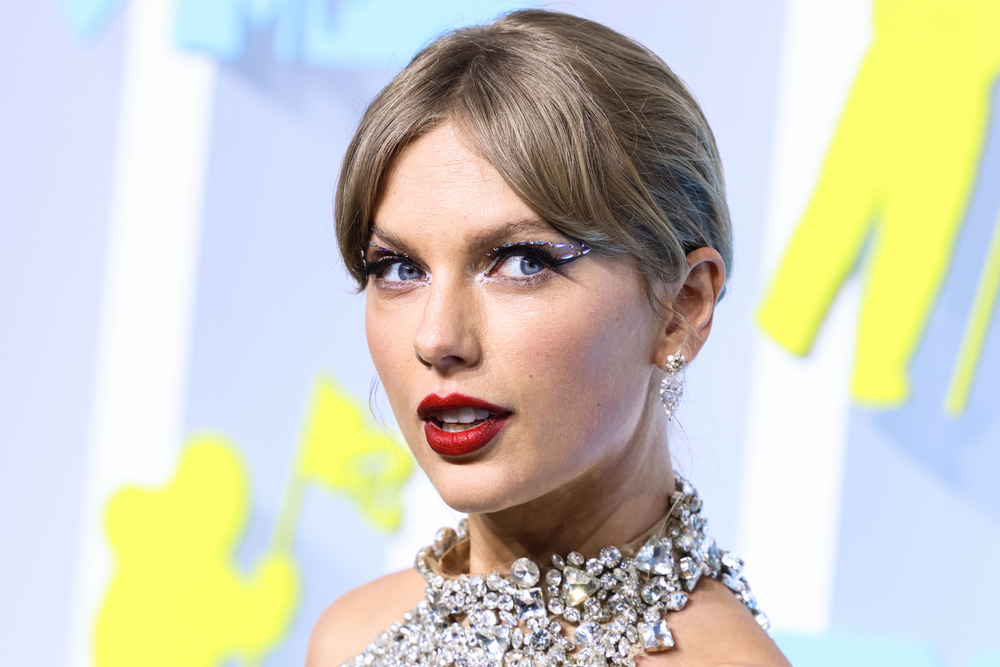
Taylor Swift bought her Watch Hill, Rhode Island vacation home for $17.75 million in 2013. At the end of July, Rhode Island's new vacation home tax kicked in — targeting any property worth over $1 million that's occupied less than half the year. Swift now owes the Ocean State for the privilege of owning a house she doesn't live in full-time.
She's not the only target. She's just the most famous one.
Former New York Lt. Governor Betsy McCaughey laid out the full picture in a NY Post column this week, and the scope of what Democrats are assembling across multiple states is worth paying attention to. Rhode Island's vacation home tax is one piece. Connecticut is pushing the first statewide property tax on homes valued over $3 million — primary or secondary — and Democrats there hold a veto-proof majority. Washington D.C. has a proposed mansion tax on residences above $2.5 million, targeting neighborhoods like Georgetown, Kalorama, and Massachusetts Avenue Heights.
McCaughey pointed out a detail that practically writes itself: Senators Bernie Sanders and Elizabeth Warren, two of the loudest "tax the rich" voices in Washington, don't actually live in those D.C. neighborhoods. They'd be exempt from the very tax they champion.
But the big one lands in November. California's Proposition 40, branded the "Billionaire Tax Act," would impose a 5% wealth tax on total net worth — not income, net worth. That means homes, yachts, stocks, bonds, and private company ownership stakes. Governor Gavin Newsom's state wants to tax wealth that hasn't been sold, earned, or realized. Ninety percent of the revenue is earmarked for healthcare services, and the measure is backed primarily by healthcare unions.
The word "onetime" appears in the proposition language. McCaughey noted what happened the last time a state used that word. Connecticut adopted its income tax in 1991, sold it as temporary with a single bracket. Thirty-five years later, it's still there — expanded to seven brackets. "Onetime" in tax policy is like "just the tip" in a con.
The "tax the rich" crowd frames this as billionaires paying their fair share. But Cato economists Adam Michel and Chris Edwards have pointed out that only 2.7% of billionaire wealth sits in luxury items. The other 97.3% is in business assets — the capital that funds trucks, computers, equipment, and the productivity improvements that drive wage growth for workers. Taxing that capital doesn't take money from yacht dealers. It takes money from the businesses that employ everyone else.
McCaughey's column puts it bluntly: "Wake up, everyone. You're the ones in the 'tax the rich' crosshairs."
She's not wrong. The Democratic Socialists' own magazine declared that "there is not a single state that is a safe haven" — meaning they intend to bring these policies everywhere. Not just to billionaires in California or vacation homeowners in Rhode Island. Everywhere.
The math tells the story. U.S. poverty in 2026 is half what it was in 1959, driven by the capital investment and economic growth that these taxes would drain. The billionaires Democrats love to target — people like Jeff Bezos, whose $250 billion in wealth is overwhelmingly Amazon stock — aren't sitting on piles of cash. They're sitting on ownership stakes in companies that employ hundreds of thousands of people. A 5% forced liquidation of those stakes doesn't redistribute wealth. It destabilizes the companies.
Google cofounders Larry Page and Sergey Brin already left California. So did Meta CEO Mark Zuckerberg. The wealth doesn't stay put and wait to be taxed. It moves. And when it moves, the tax burden shifts downward to the people who can't afford to relocate.
Connecticut's "temporary" one-bracket income tax became a permanent seven-bracket system in 35 years. Rhode Island's vacation home tax starts at $1 million today. The $3 million mansion threshold in Connecticut is $3 million today. Every one of these lines moves in one direction.