

On Sunday night, 60 Minutes introduced the country to Moussa Diawara as a devoted husband and father of two who was torn from his family by ICE.
There's a problem with that picture. According to his asylum application, the claim Diawara used to stay in this country was that he was a gay man.
The application, which DHS has made public, says Diawara experienced "female behaviors and feelings." "I was more comfortable being intimate with boys rather than with girls," he wrote. He said he feared persecution in his home country of Mali because of his sexual orientation.
CBS never told viewers any of that.
The network knew enough about the case to include a line saying DHS questioned the credibility of Diawara's fear of persecution. But it never told viewers what that fear was, or why anyone might doubt it.
What viewers got was the family. Diawara's 16-year-old son, Corey, sat in the family's Texas home and told the camera, "It feels really empty without him." CBS stressed that Diawara had no criminal record, and that he'd lived in the U.S. for 25 years and driven for Uber.
Here's the backstory CBS skipped. Diawara arrived on a tourist visa at age 32 and never left. When he finally asked to stay, he applied for protection on two grounds: that he was gay, and that he had converted to Christianity in Muslim-majority Mali. By his own account, the conversion happened eight months before he wrote his statement.
At the time, the application listed him as single. He later married a U.S. citizen and had two children with her.
In 2012, an immigration judge accepted his story and barred the government from deporting him to Mali. That ruling is the center of the 60 Minutes segment. The show's argument was that the U.S. had every right to deport Diawara, just not to Mali.
So in July, ICE sent him to Ghana, which gave diplomatic assurances for his safety. Ghanaian authorities then sent him on to Mali. His lawyer has asked a federal judge to order him back to the United States.
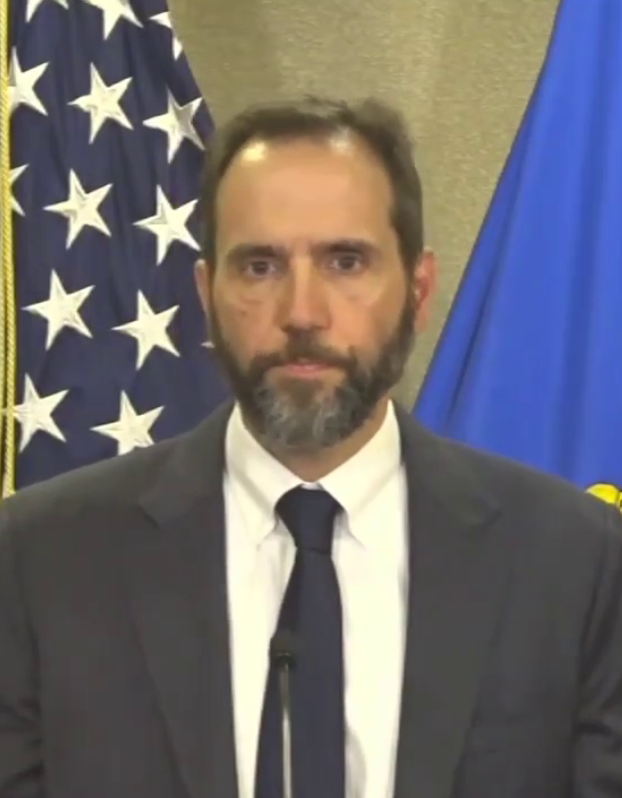
DHS General Counsel James Percival pulled the file after the segment aired.
"This illegal alien is @60Minutes poster child for what it claims are wrongful deportations," Percival posted. "I pulled his file. His claimed reason for fearing Mali was that he is 'gay,' just in case you're wondering how bad the immigration fraud problem is."
ICE was even less diplomatic. "The 60 Minutes sob story tonight highlighted an illegal alien and his wife and two children," the agency posted. "One problem. The illegal alien claimed he was a HOMOSEXUAL in order to try and dodge deportation to Mali." Then it added: "You literally cannot make this up."
The asylum file wasn't the only thing CBS cut.
Percival sat down with 60 Minutes correspondent Gianna Toboni for the same segment. After it aired, he released uncut clips of his interview. The broadcast had dropped his answers on the criminal records of illegal aliens in ICE custody. It also dropped his point that many serious crimes aren't classified as "violent." That mattered, because the segment leaned on the statistic that fewer than 14 percent of recent ICE detainees had violent criminal records.
In one exchange, Toboni acknowledged that removing illegal aliens accused or convicted of homicide and sexual assault was a good thing. Percival pushed back on whether that should be the only standard. "Should that be the limit of who has to follow the law?" he asked. Viewers didn't hear it.
60 Minutes has been here before. In 2024, the show aired a different portion of Kamala Harris's answer to a question about Israel than the version CBS had promoted the week before. The edit made her sound more informed and coherent. Trump sued, and in July 2025, CBS's parent company Paramount paid $16 million to settle.
CBS has since posted an extended version of the Percival interview online. It hasn't explained why the gay asylum claim didn't make the broadcast.
Diawara's lawyer is still asking a federal judge to bring him back. The same 2012 ruling that kept Diawara here for more than a decade is the one that ruling would rest on.